


Short answer: Google and Few others.
The future of AI isn’t just about who builds the smartest model today; it is about who has the infrastructure, the data ecosystem, and the distribution to sustain it tomorrow. As we explore in our AI Journey guide, the landscape is shifting rapidly.
Here is the prophecy of Google’s continued dominance in the AI landscape, rooted in architectural realities:
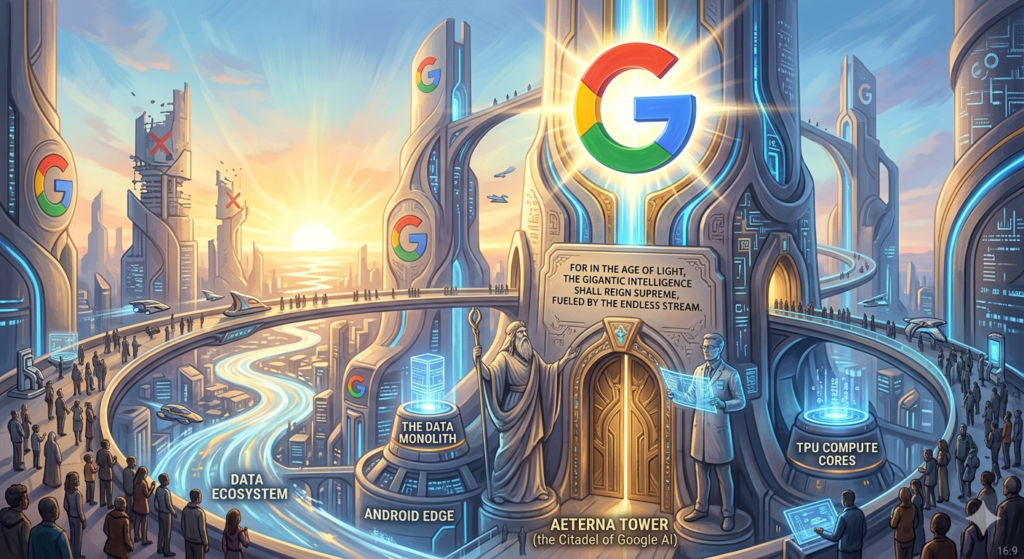
1. The Data Monolith
While other models rely on scraped web data, Google sits on an unparalleled data empire. With billions of daily queries on Google Search, a vast video corpus on YouTube, and workflows inside Google Workspace, Google possesses the world’s most diverse multimodal data engine. This is a key reason why Faster Aim technology focuses on these high-level integrations.
2. Vertically Integrated Compute
The AI wars are constrained by silicon. Google designs its own hardware, specifically custom Tensor Processing Units (TPUs). This vertical integration allows them to serve models at a scale and cost-per-token that competitors relying on external cloud infrastructure simply cannot match. For more on the hardware race, see Anthropic’s latest updates.
3. Fused Distribution
Google doesn’t need to convince users to download a new app; it is already the default fabric of digital life. By embedding agentic capabilities into Android, Search, Maps, Chrome, and Workspace, Google turns AI into an ambient utility. This “ubiquity strategy” is why many entrepreneurs must adapt to stay competitive.
4. The Android and Edge Advantage
The next frontier is on-device autonomy—models that run locally and privately. With Android powering billions of devices, Google controls the operating system layer, allowing for unmatched integration of edge-AI models like Gemini Nano directly into mobile silicon.
The Verdict: Competitors may win specific rounds with rapid software iterations, but Google is playing an ecosystem game. By owning the data pipeline, custom silicon, cloud infrastructure, and global distribution, Google is structurally built to anchor the future of AI.